The MapGridder Blog
Field guides for grids, symbols, files and exports.
SFAS Land Nav Practice: Build Your Own Lane
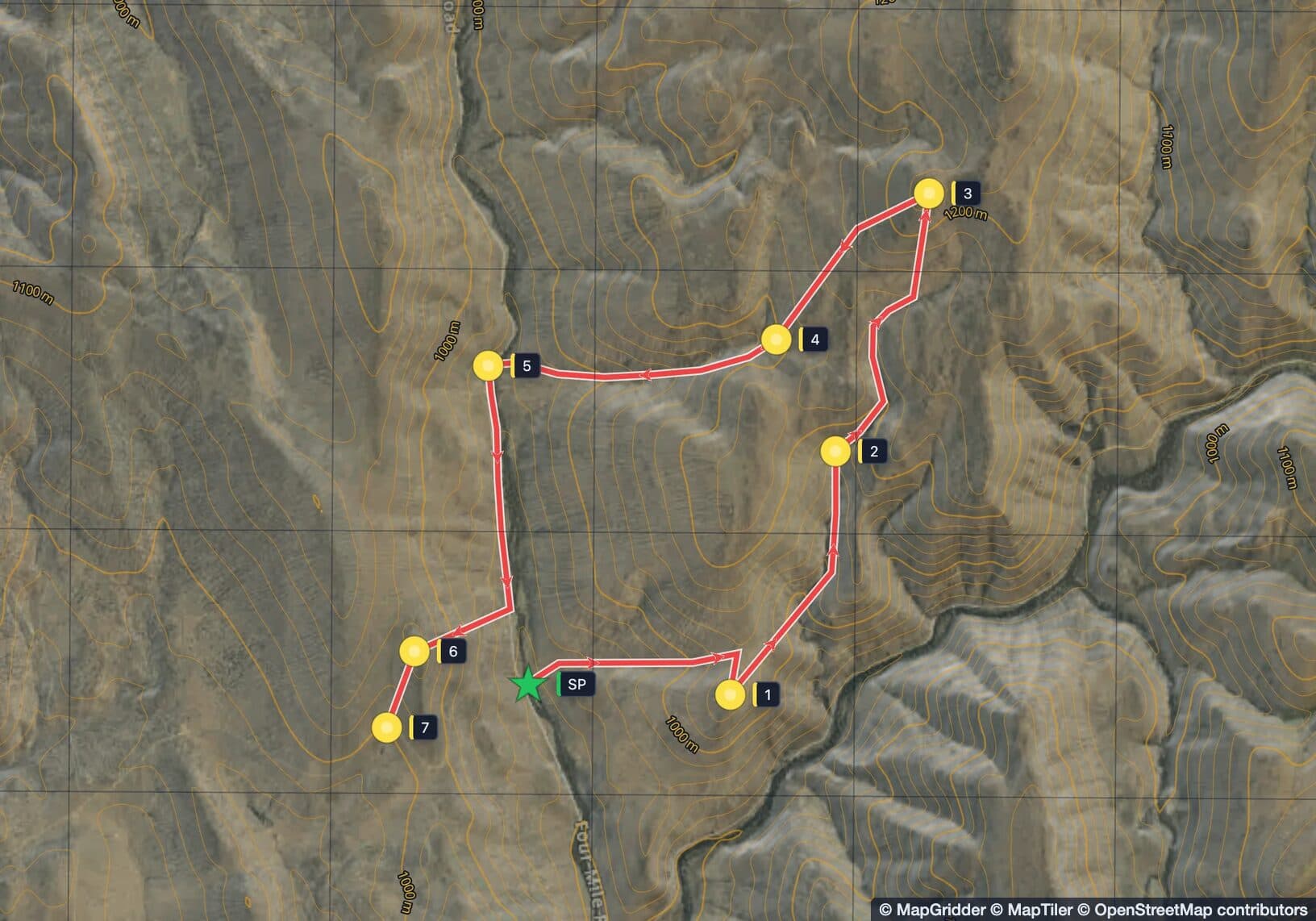
To practice SFAS land nav without access to Fort Bragg, set 7 to 9 points 300 to 1,200 metres apart on public land near you, plan each leg through a handrail and an attack point, and print the map at 1:50,000 with the MGRS grid.
Start here
Three posts, twenty minutes, and B3 means something.
From the LKP to the ICS-204.
Bring imagery and tracks in, take a PDF out.
MGRS in Google Maps and Google Earth
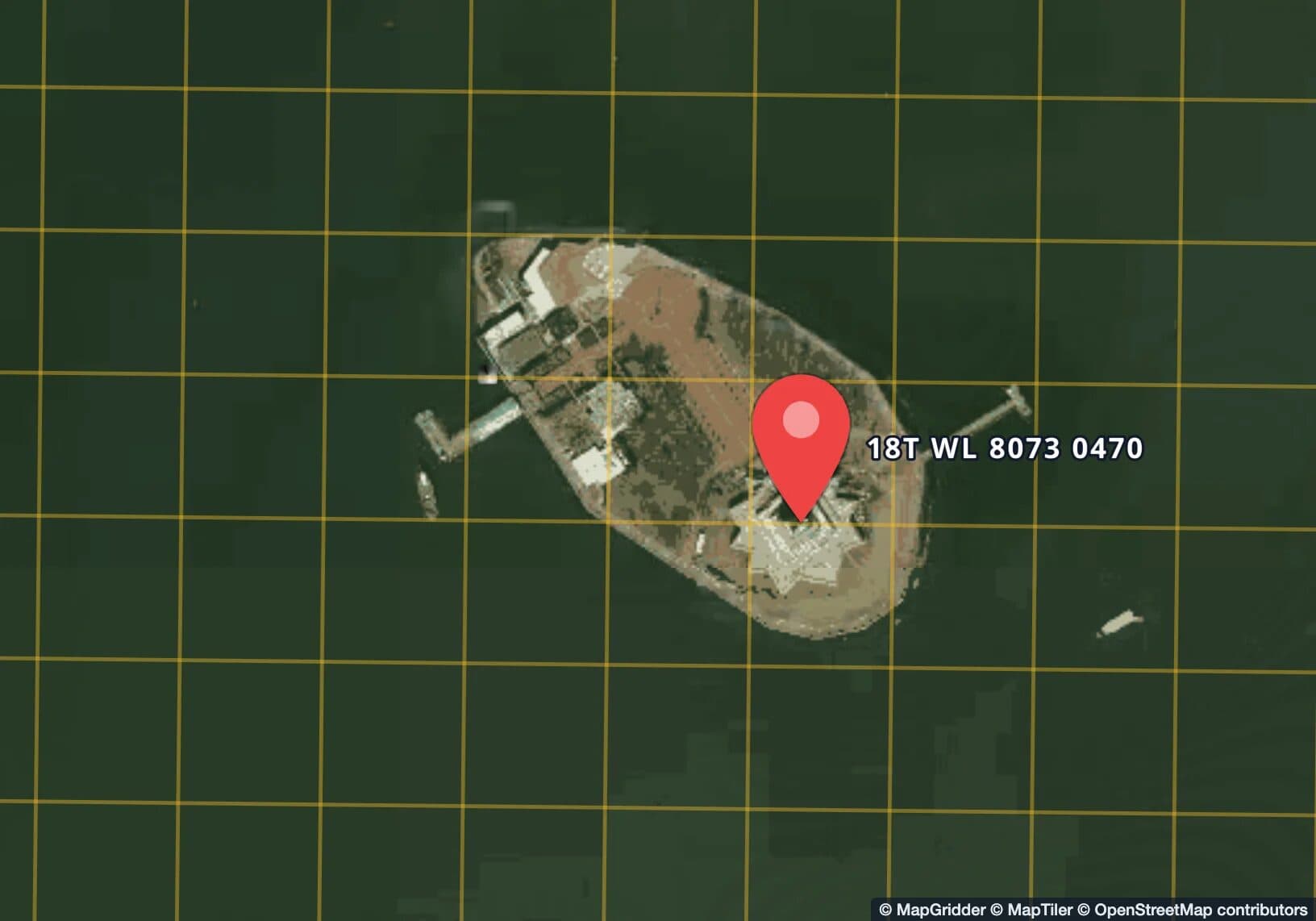
Google Maps cannot read or show MGRS, Google Earth Pro on a desktop shows an MGRS readout under the cursor, and Google Earth in a browser or on a phone shows lat/long only, so a live MGRS grid needs a map built for it.
Stadium Drone No-Fly Zone: The Ravens Case
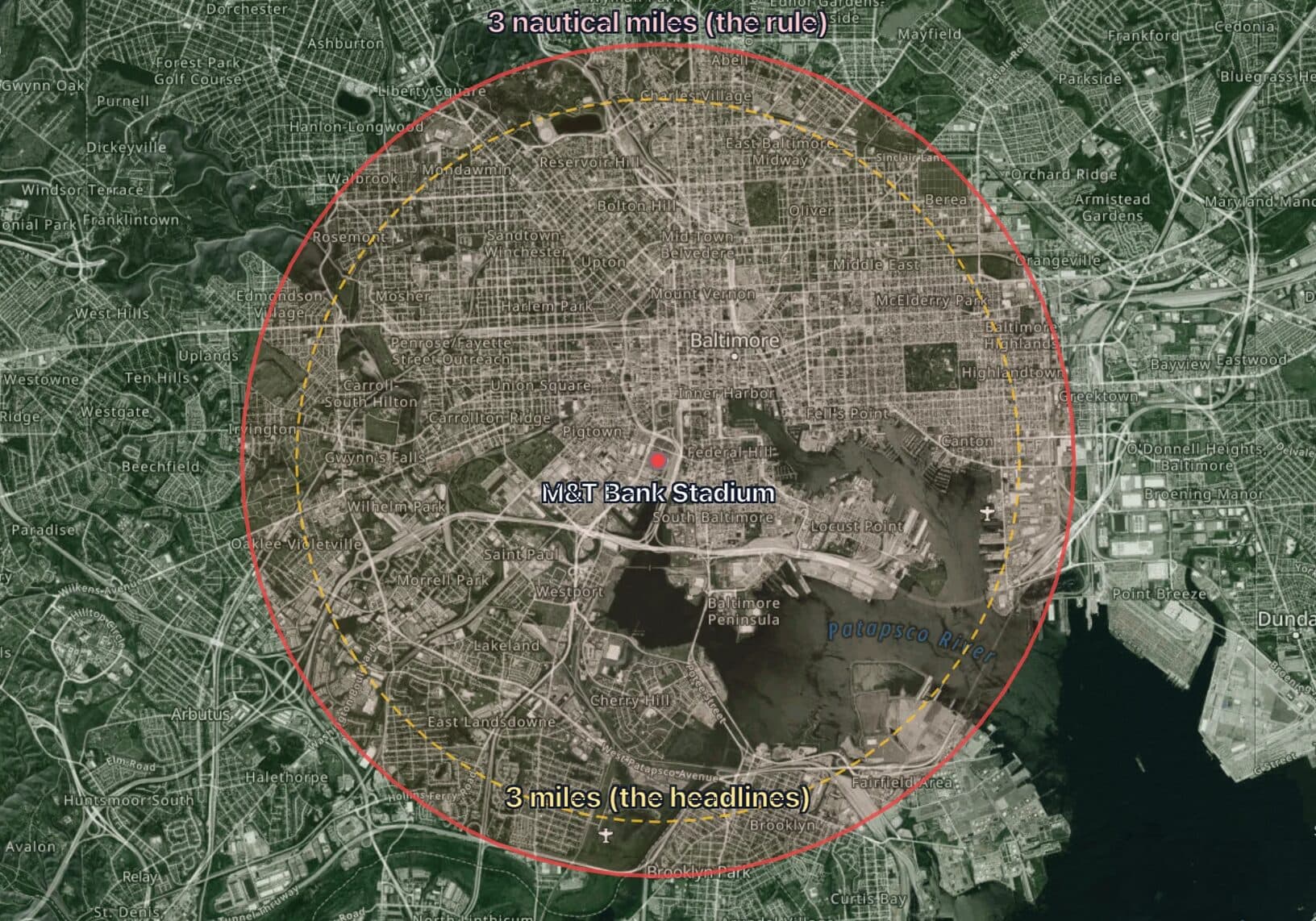
On game day, drones are banned within 3 nautical miles (5.56 km) of a stadium with 30,000 or more seats, up to 3,000 feet, from an hour before the game to an hour after.
Security Site Plan Map: Zones and Sectors
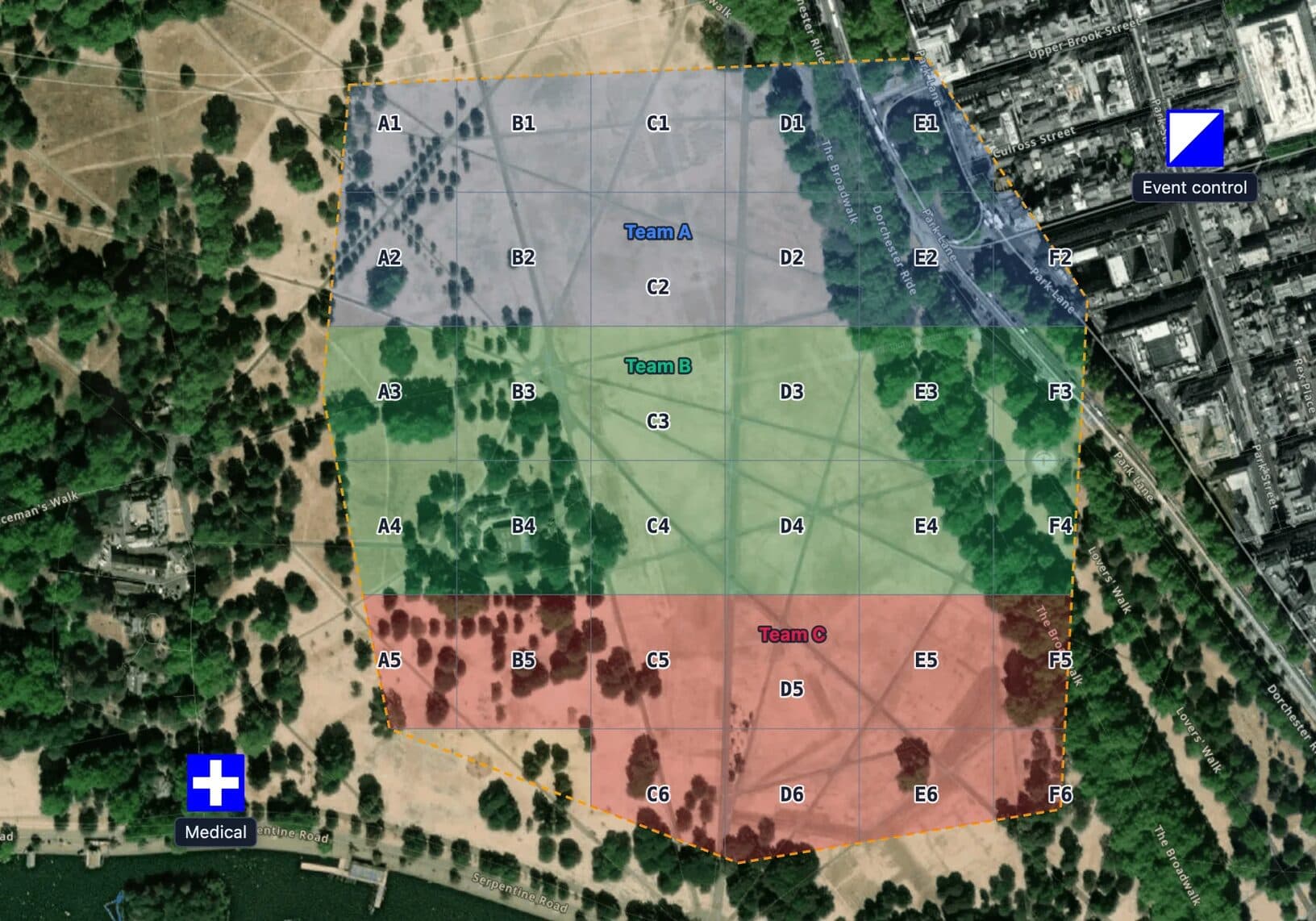
A security site plan is a scaled map of the venue with zones, posts, sectors and standoff distances that every steward can read.
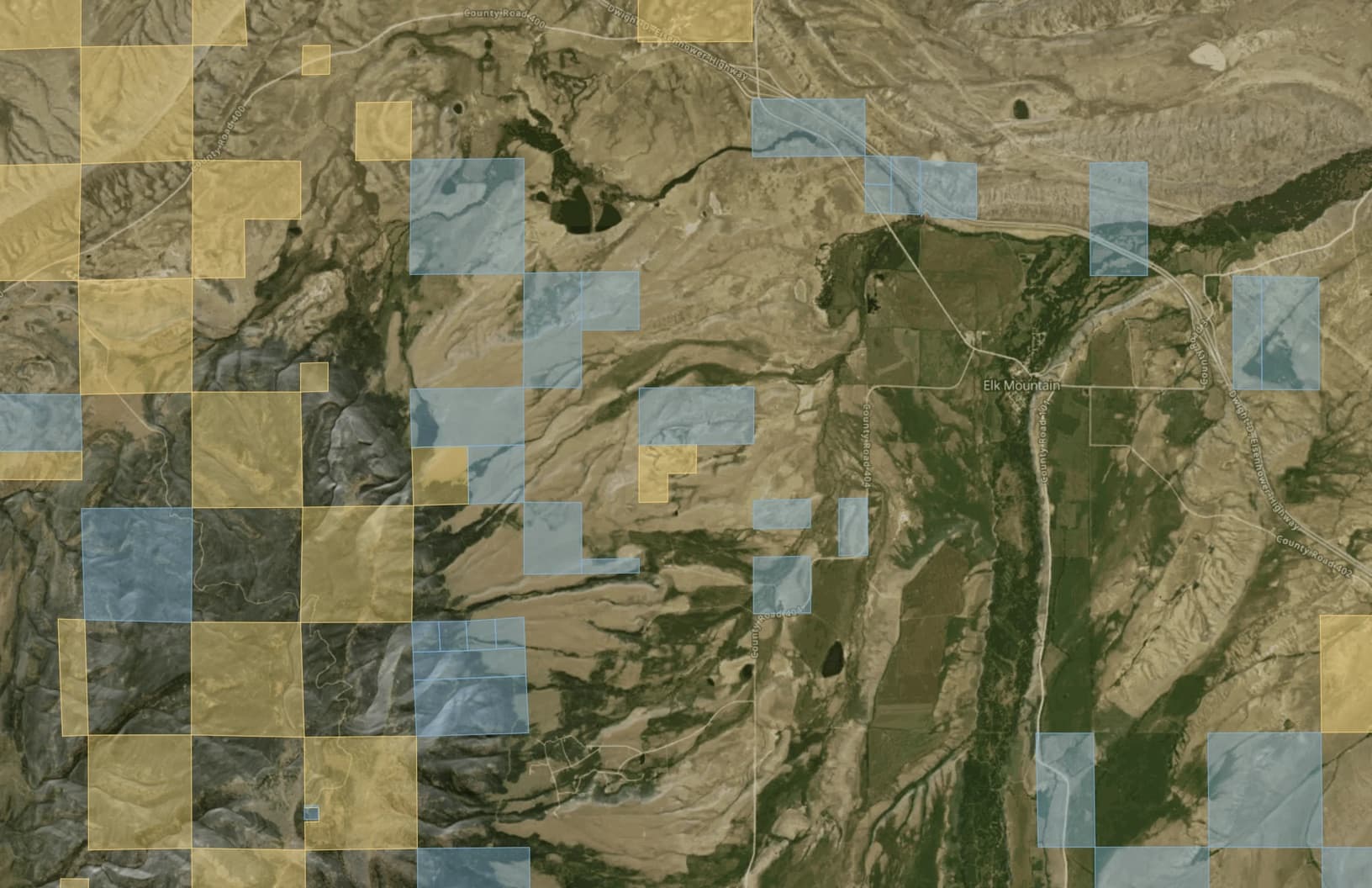
Corner Crossing, a Ladder, and a BLM Map
Corner crossing is stepping from one public parcel to the diagonal one at a shared corner without touching private ground.
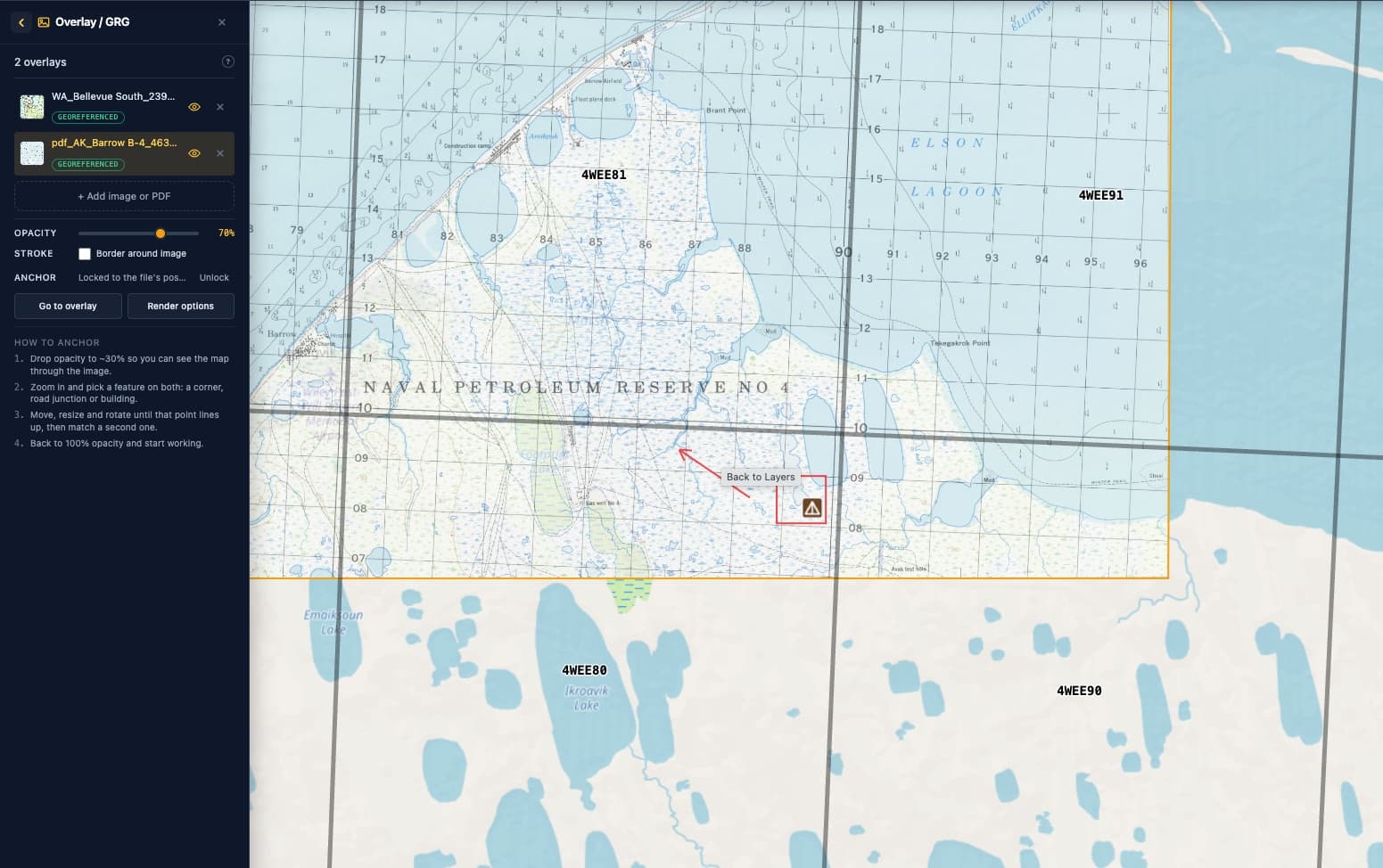
Open and Edit a Geospatial PDF (GeoPDF) Online
A GeoPDF opens georeferenced on a live basemap in the browser; pick the page, keep its layers, trim the collar, then grid it.
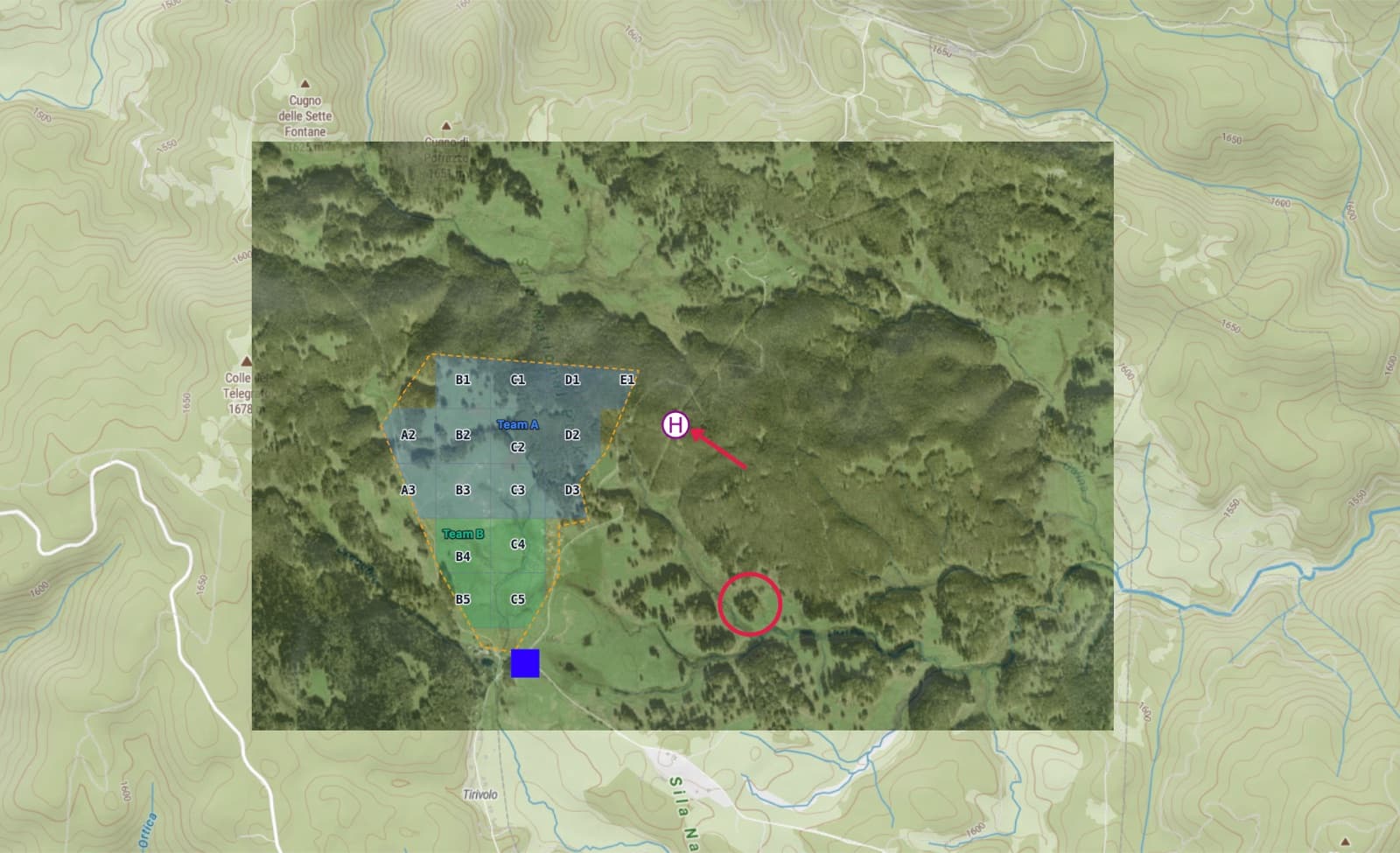
Export a Geospatial PDF (GeoPDF) Online
Export one geospatial PDF and your GPS position rides on your own map in any offline map app.
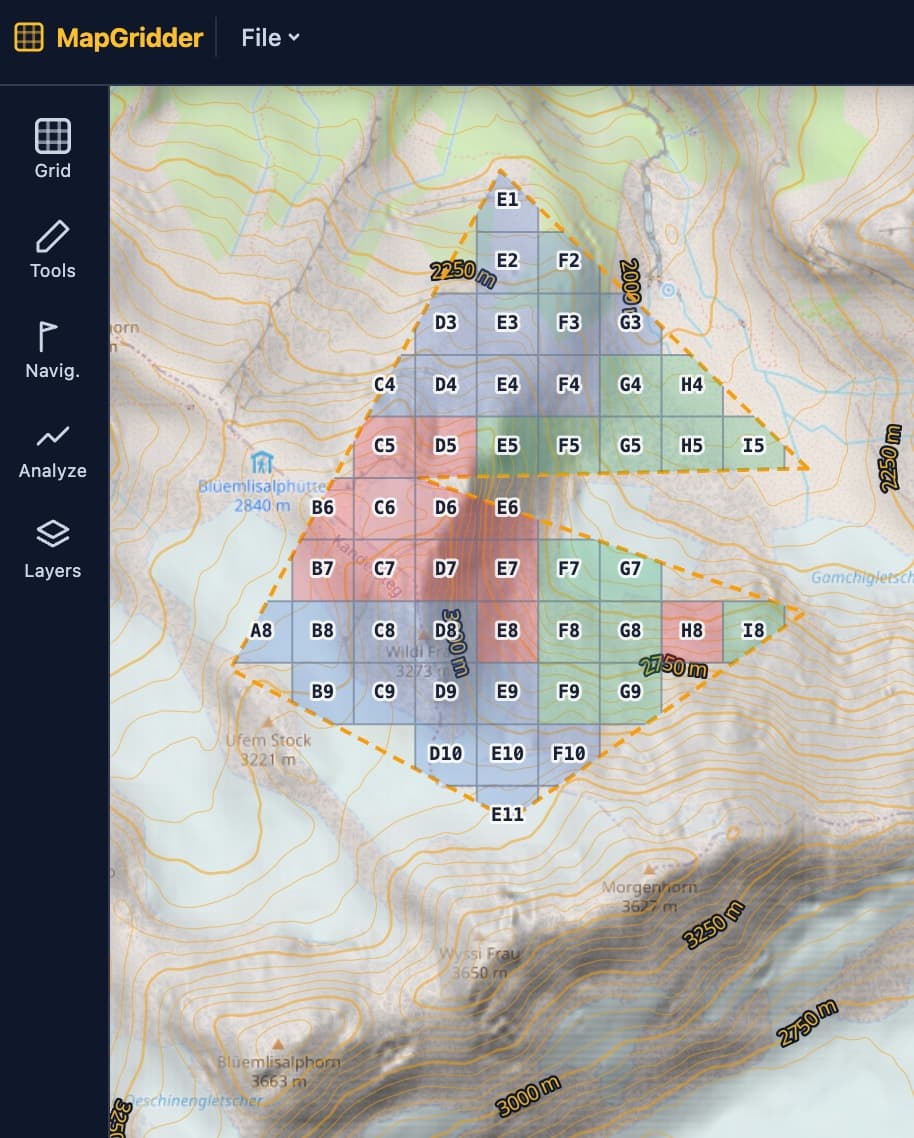
How to Divide a Search Area into Sectors
Draw the search area, split it into lettered squares and paint each team's share; the roster copies straight into the ICS-204.
SAR Map Symbols and Team Mapping, Free Online
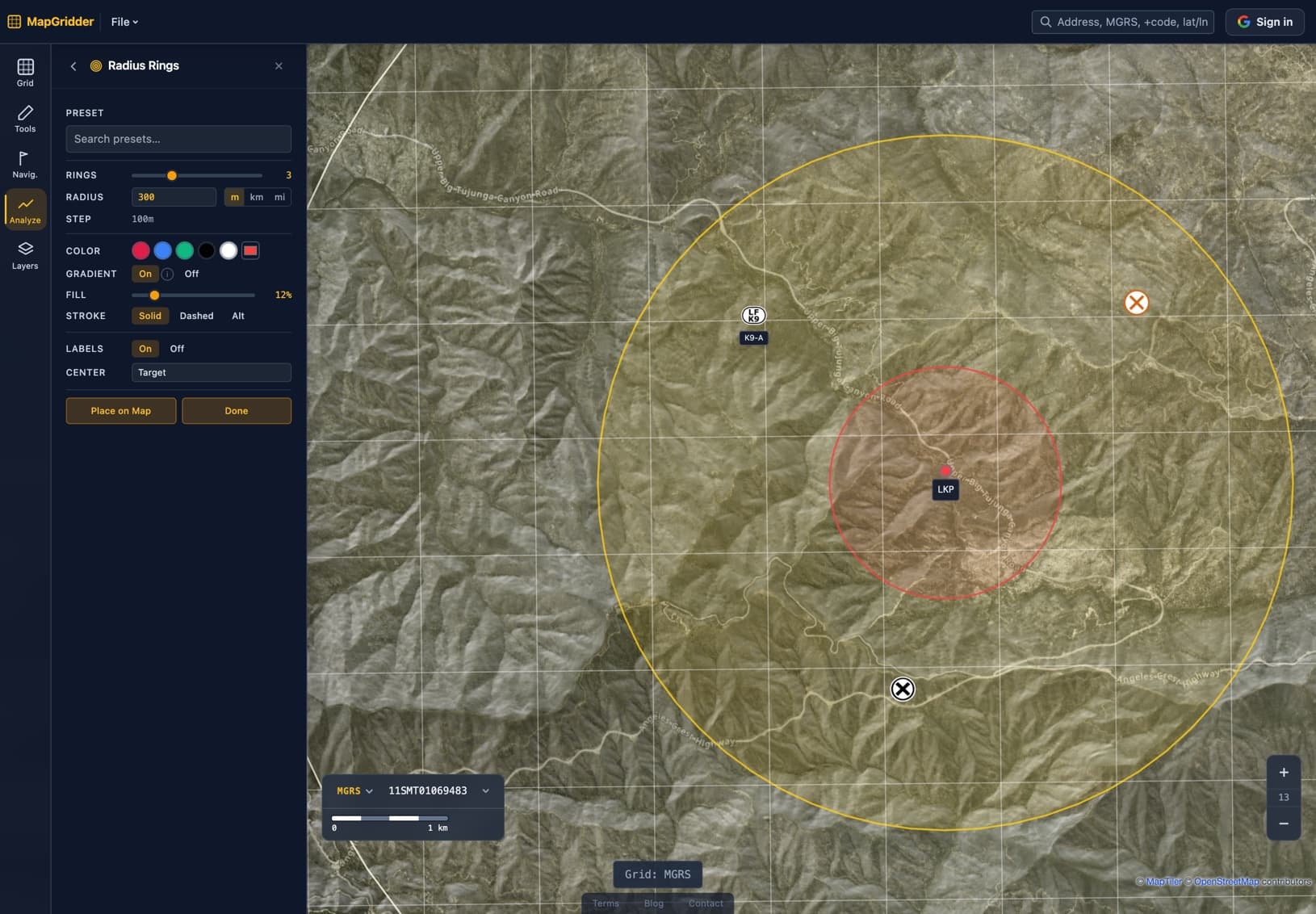
A browser tab covers the map work of a search: 65 NAPSG symbols, a USNG grid, containment rings and team tracks at debrief.
GeoTIFF Map Editor Online: Private by Design
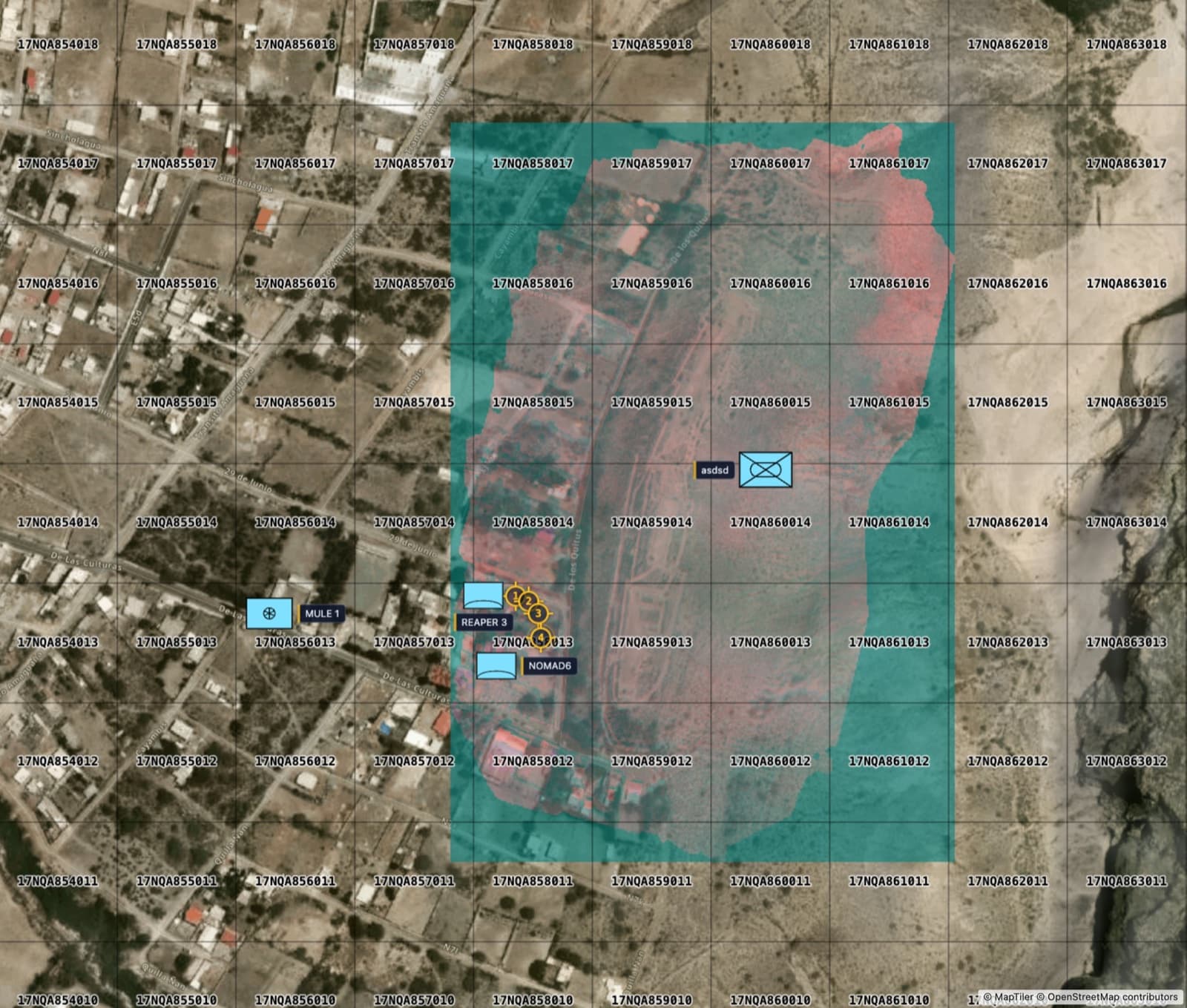
A GeoTIFF places itself from the georeferencing inside the file and its pixels are read on your device, never uploaded.
Weather Radar on a Map with MGRS and Routes
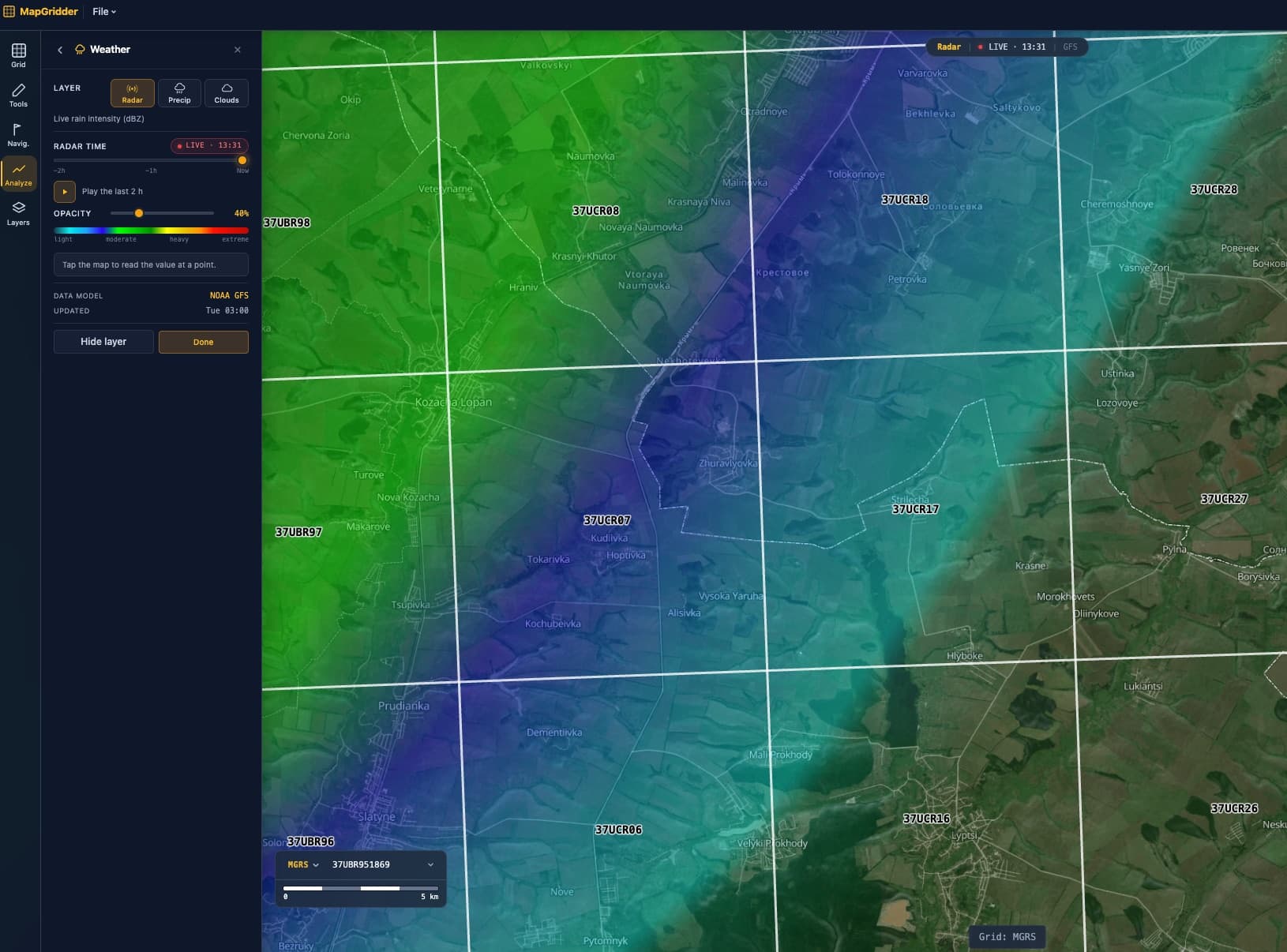
Put live radar and a 48 hour rain forecast under the grid and the route, then pick the departure window that keeps it dry.
What Is a Plus Code? How to Read One
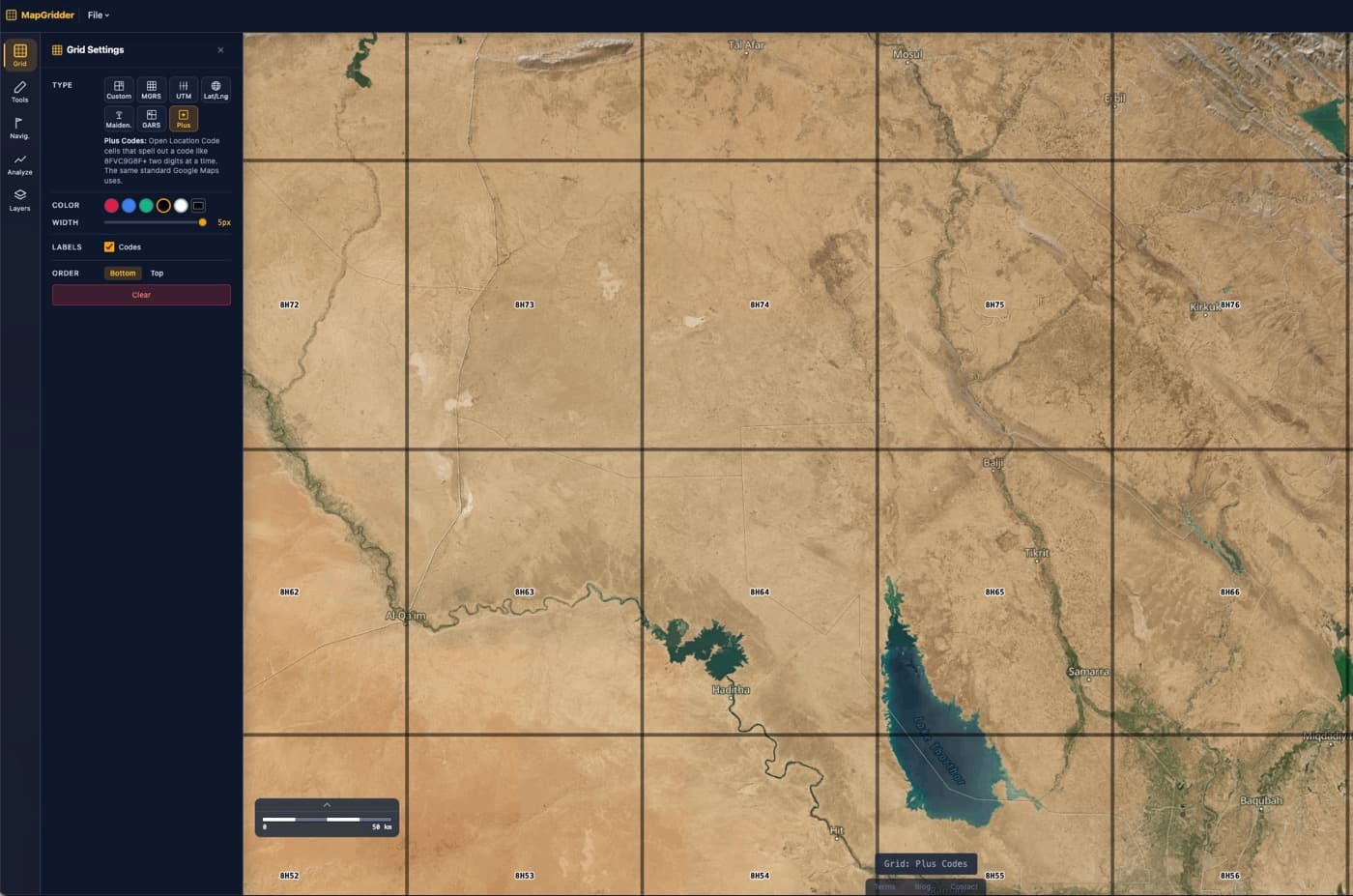
A Plus Code divides the world 20 by 20, names the cell, and repeats; 8FVC9G8F+6X is ten digits of that.
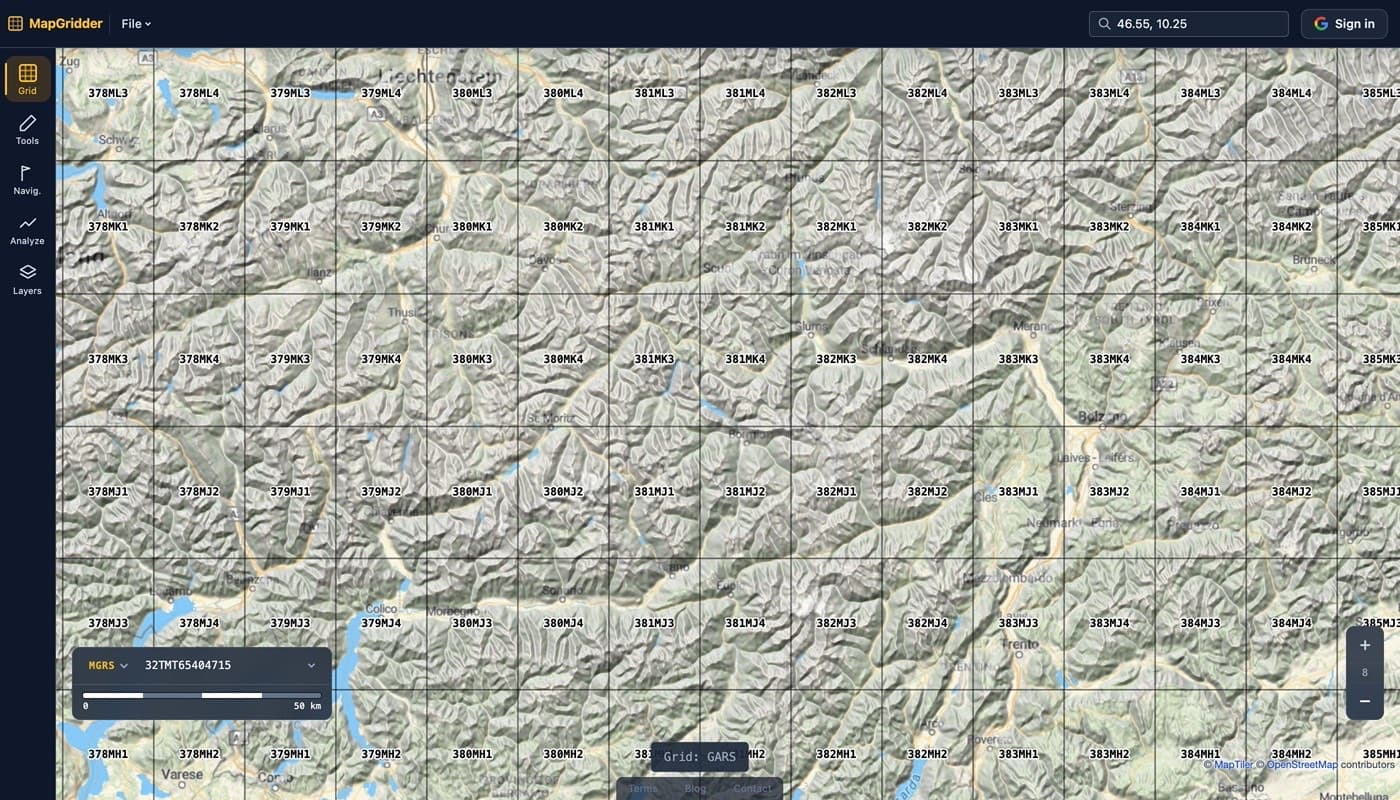
What Is GARS? GARS vs MGRS Explained
GARS names 30-minute areas by cell, quadrant and keypad; MGRS names points.
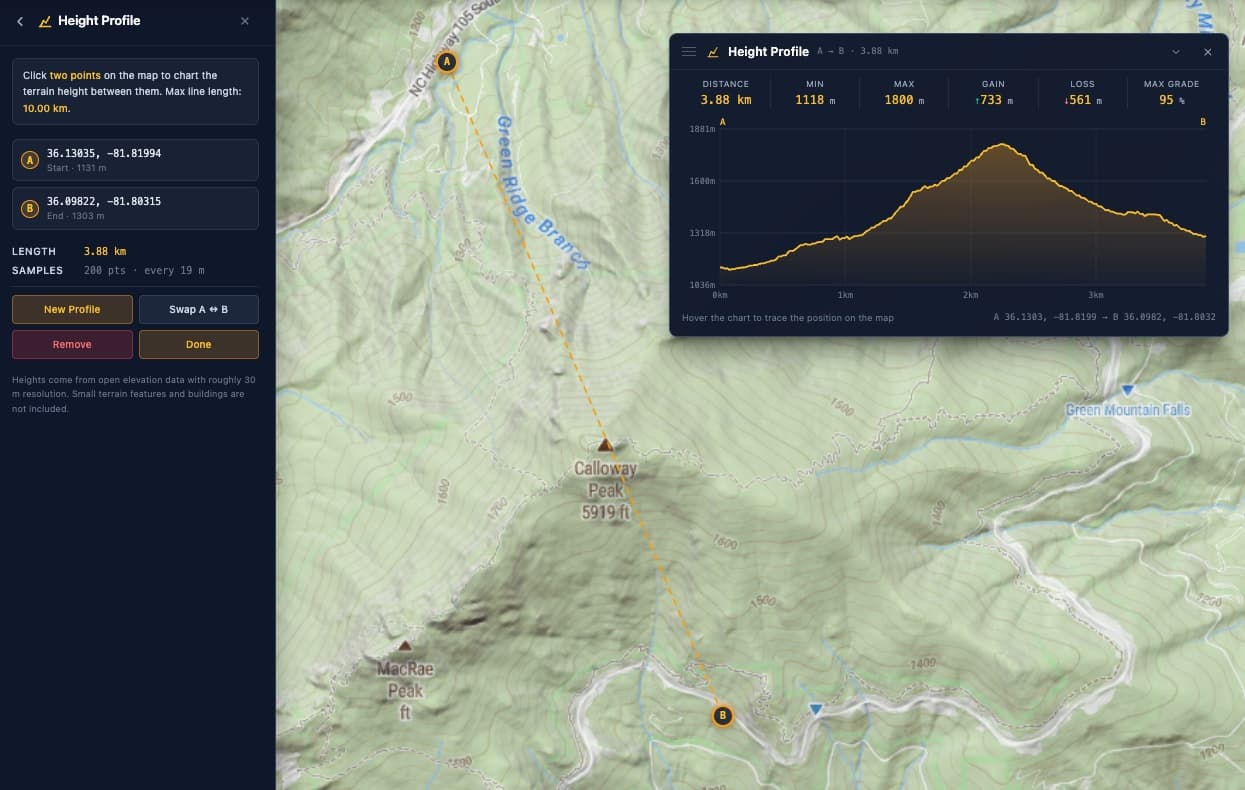
Elevation Profiles for GPX Routes and Hikes
Import or draw a route and its elevation profile builds in the panel, with gain, loss and a trace dot along the trail.
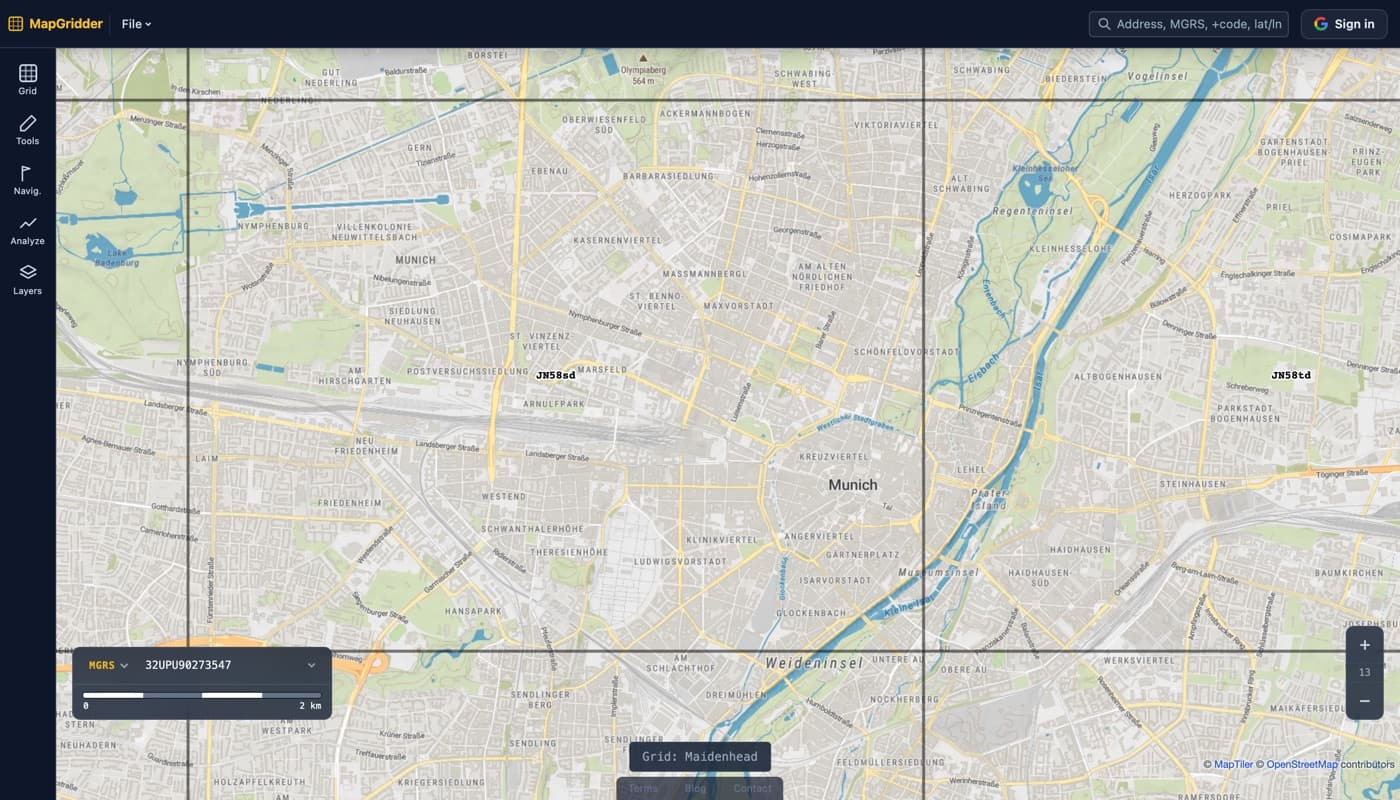
What Is the Maidenhead Grid & How to Read It
A Maidenhead locator like JN58td packs field, square and subsquare pairs into six characters.
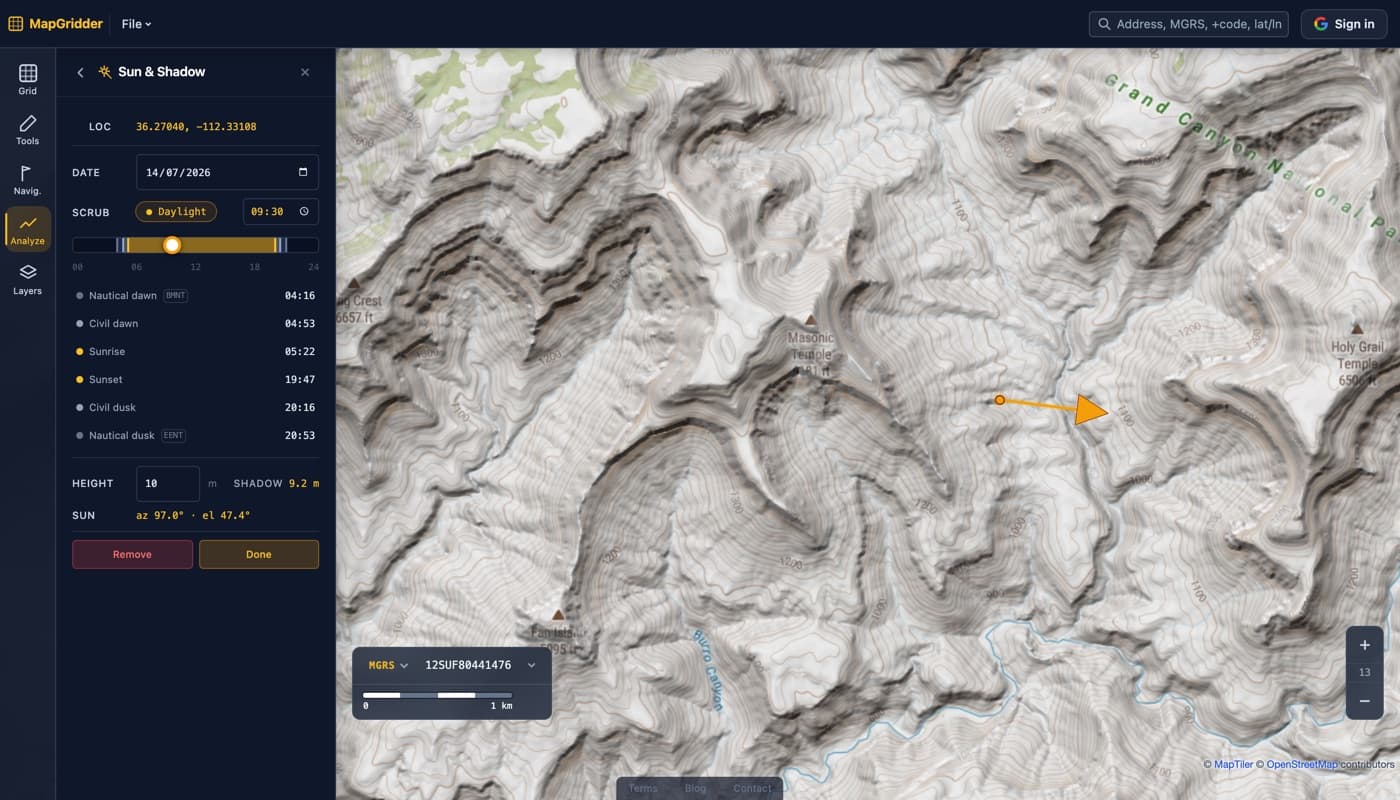
Sunrise, Sunset & Moon Times on a Map
Sunrise, sunset, moonrise and moonset for any point and date, with civil, nautical and astronomical twilight explained.
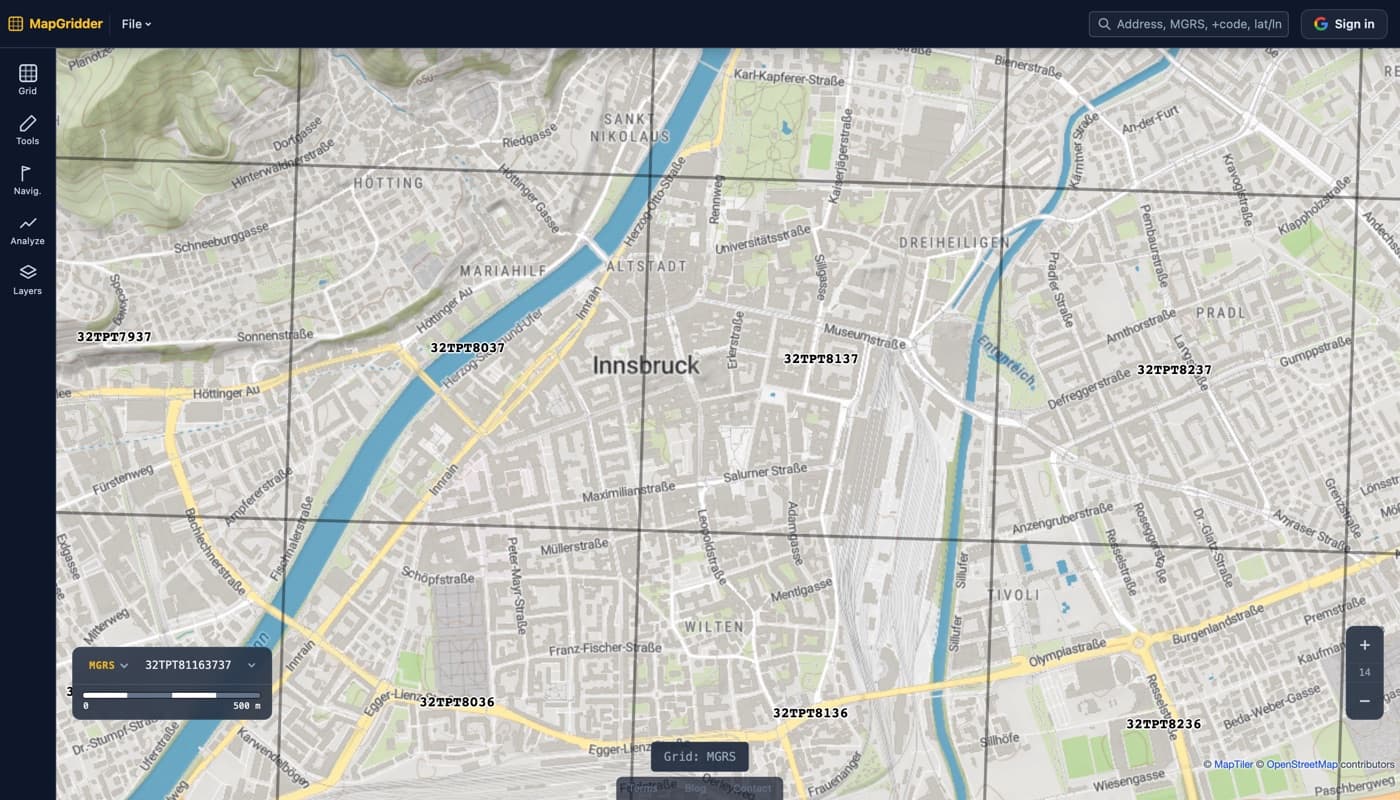
How to Create a GRG Overlay on a Map
A GRG is a reference image georeferenced onto the map with a lettered grid over it; build one in the browser with no login.
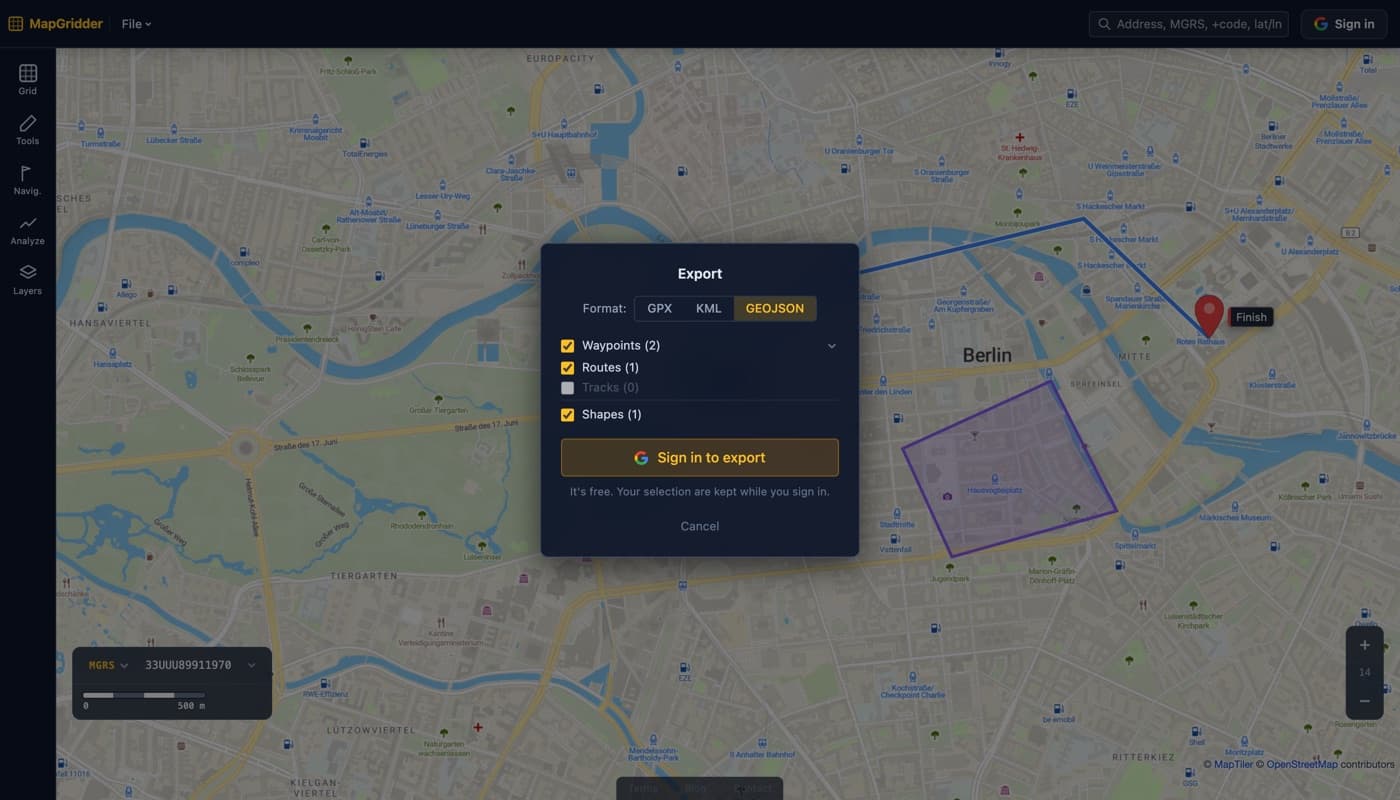
How to Export a Map to GeoJSON
Everything on the map exports as one GeoJSON FeatureCollection that almost every GIS tool opens.
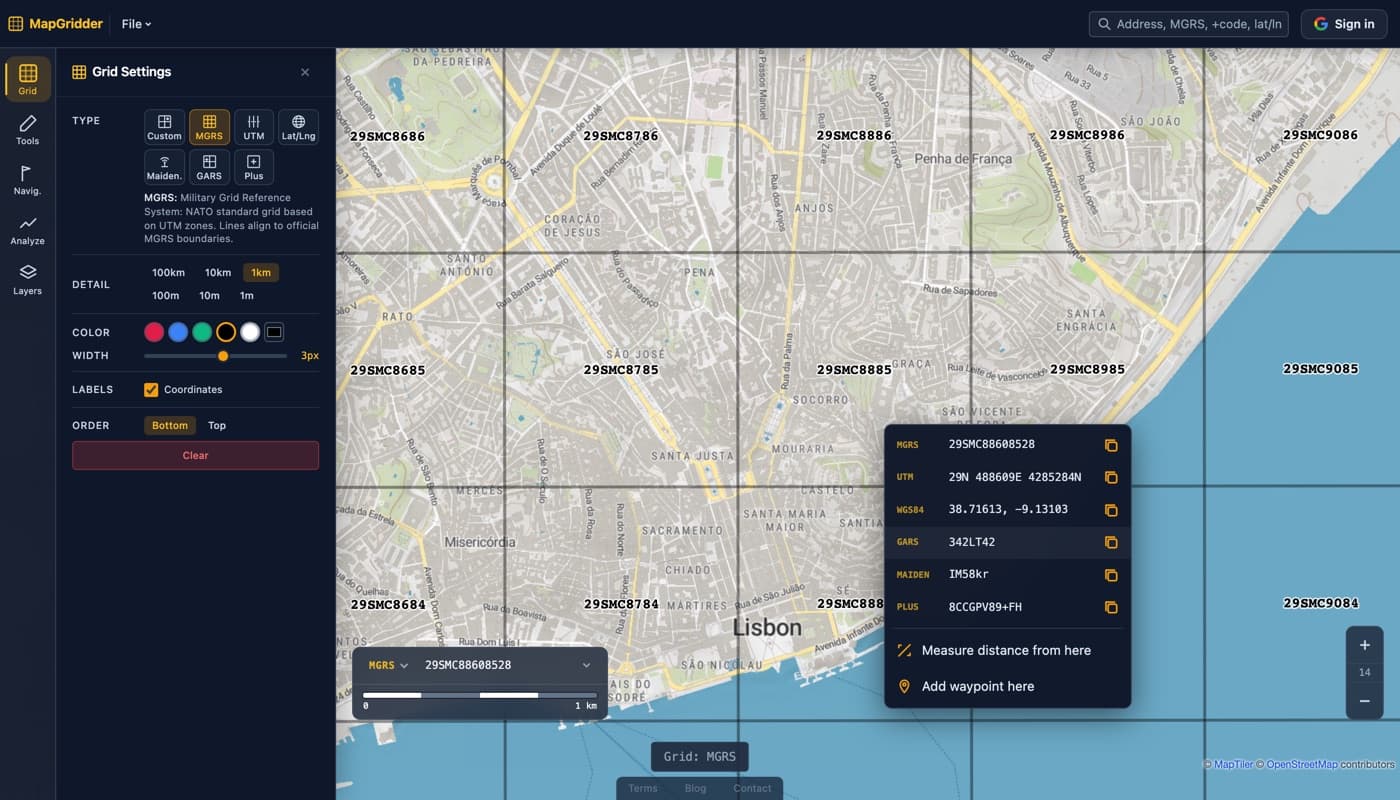
UTM vs MGRS vs Lat/Long: The Difference
MGRS, UTM and lat/long describe the same point three ways; MGRS is UTM with letters, lat/long is angles.
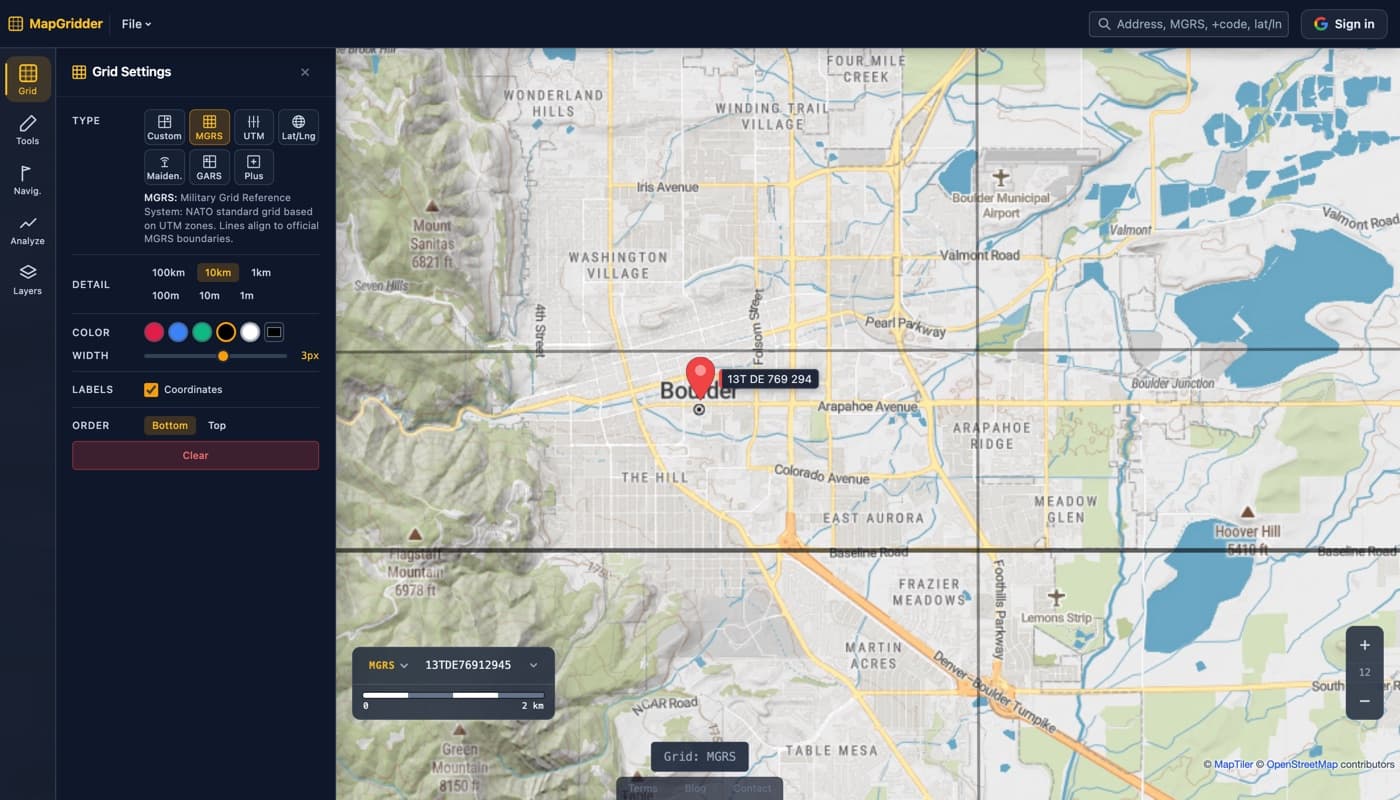
How to Read a Military Grid Reference
Read right, then up: grid zone, 100 km square, then easting and northing digits in equal halves.
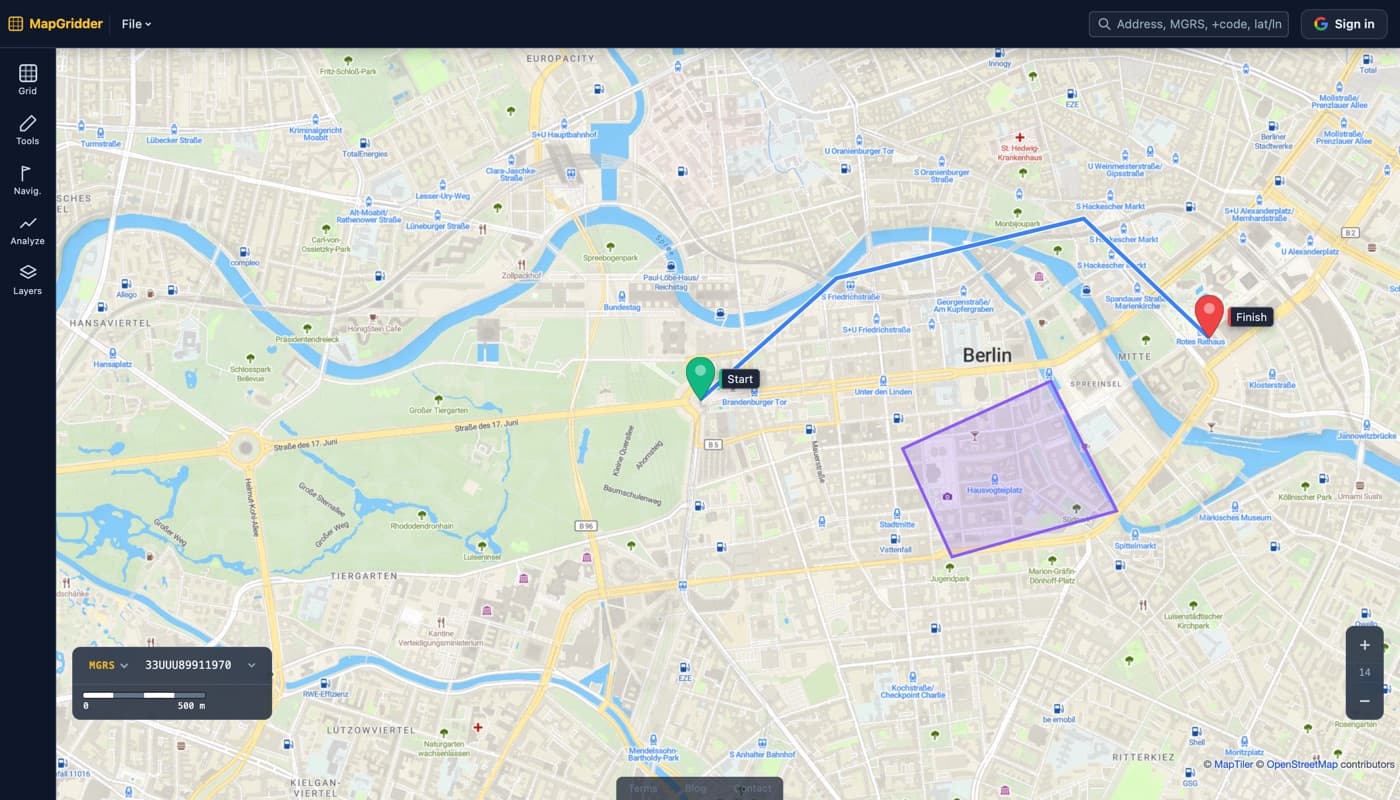
What Is GeoJSON and How the Format Works
GeoJSON (RFC 7946) is a FeatureCollection of Features, each with one of seven geometry types in longitude-first order.
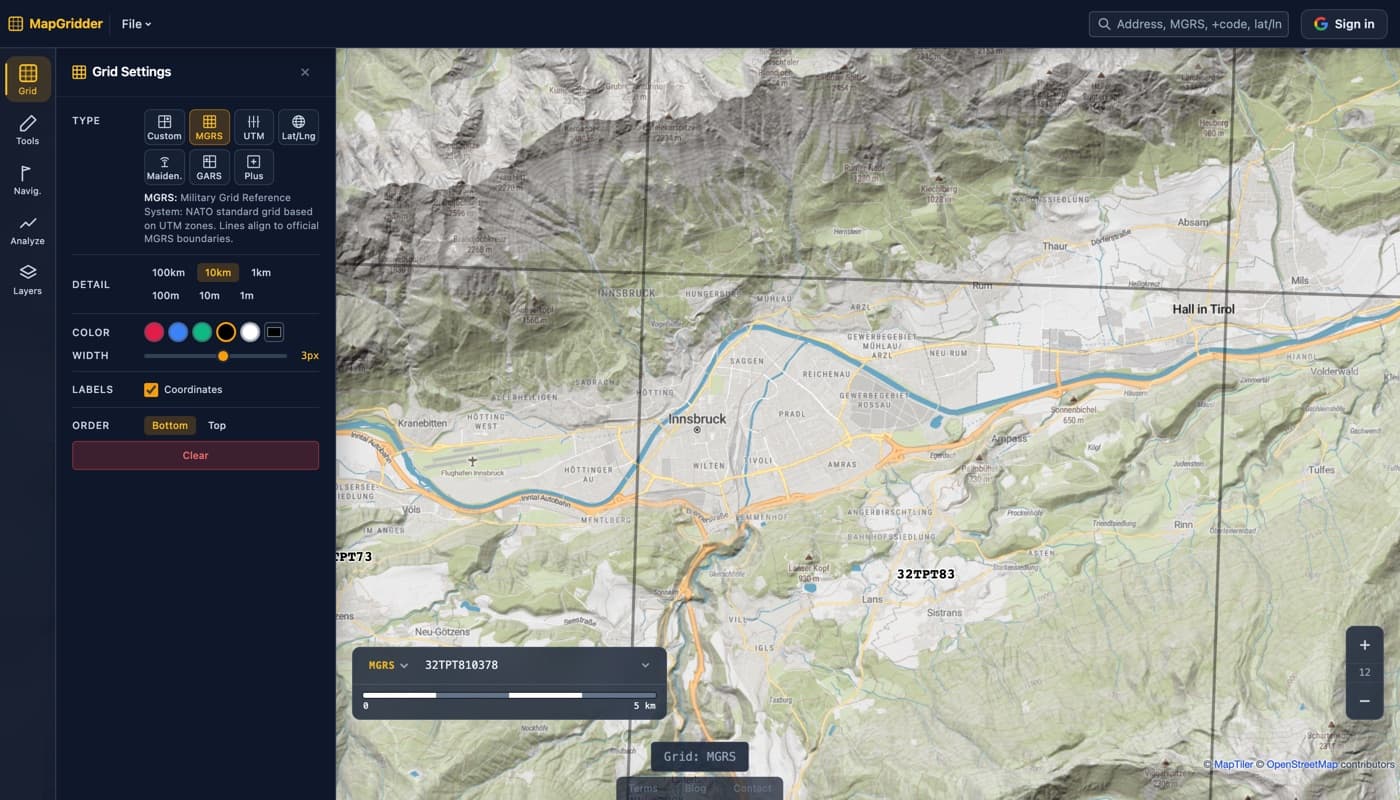
Free MGRS Grid Overlay for Any Map
An MGRS, UTM or lat/long graticule over any basemap, with the coordinate math running in your browser.
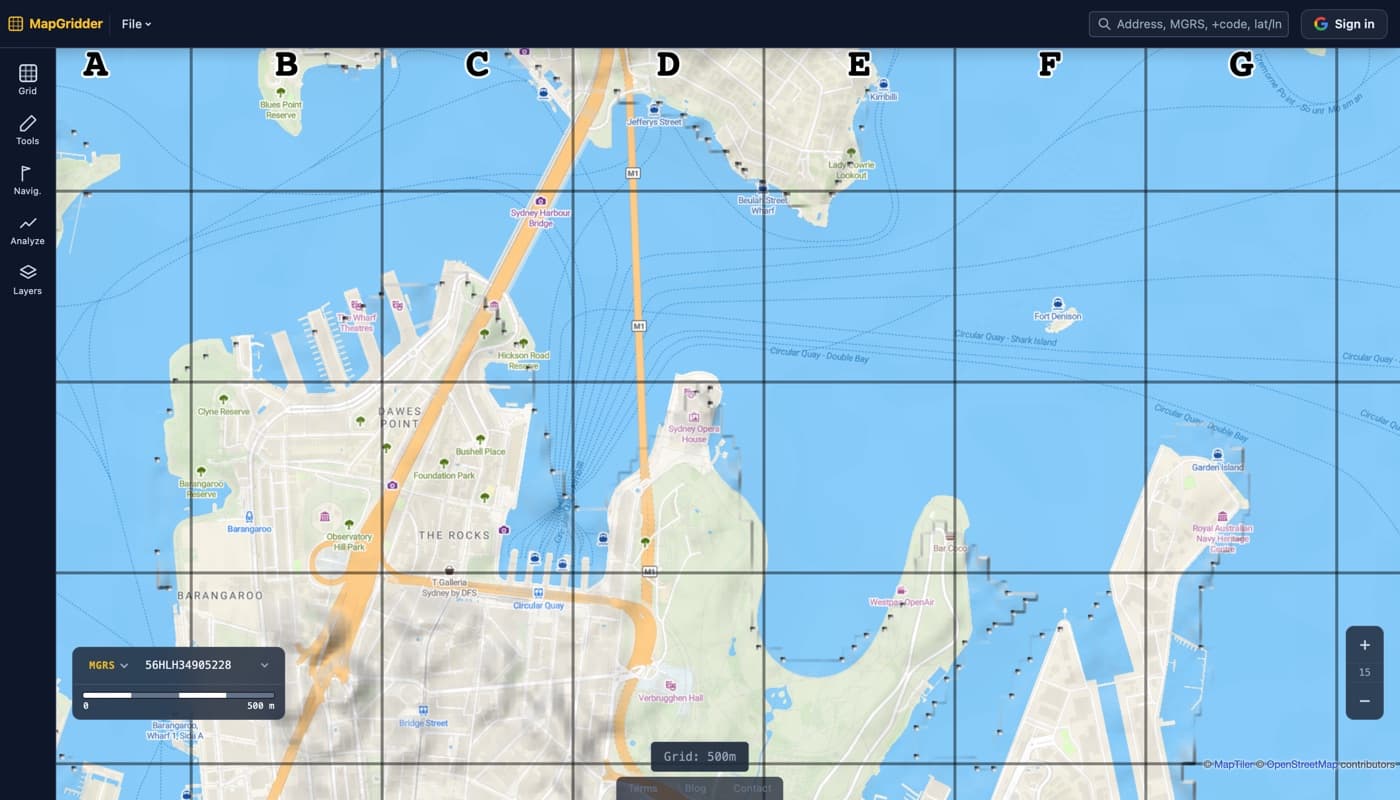
Free Map Grid Tool: No Watermark, No Fees
Most online map tools watermark exports or force sign-up; a metric grid with labels should not.
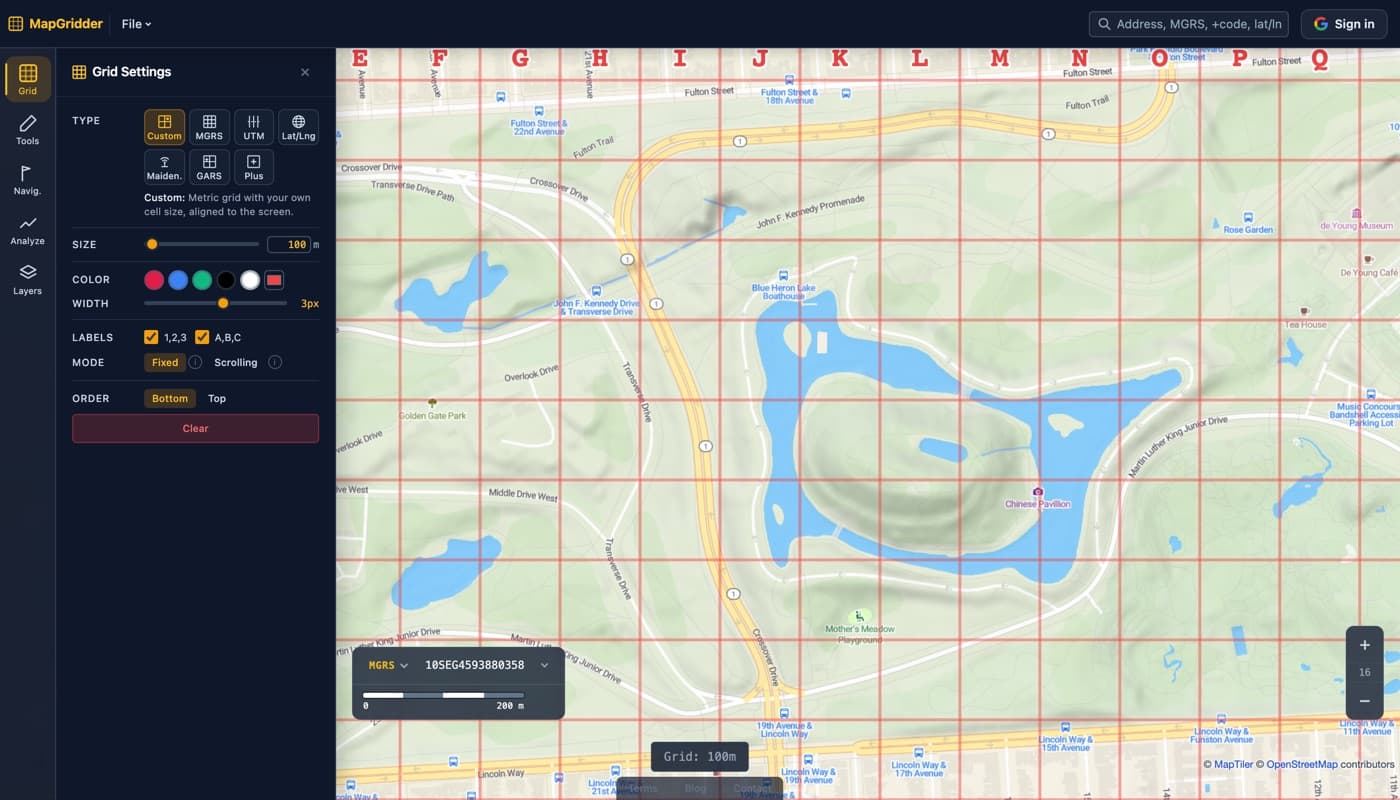
Grid Referencing for Beginners
A reference like B3 is a column letter and a row number; teams call positions without GPS coordinates.
6 Ways to Use a Grid Overlay on Maps
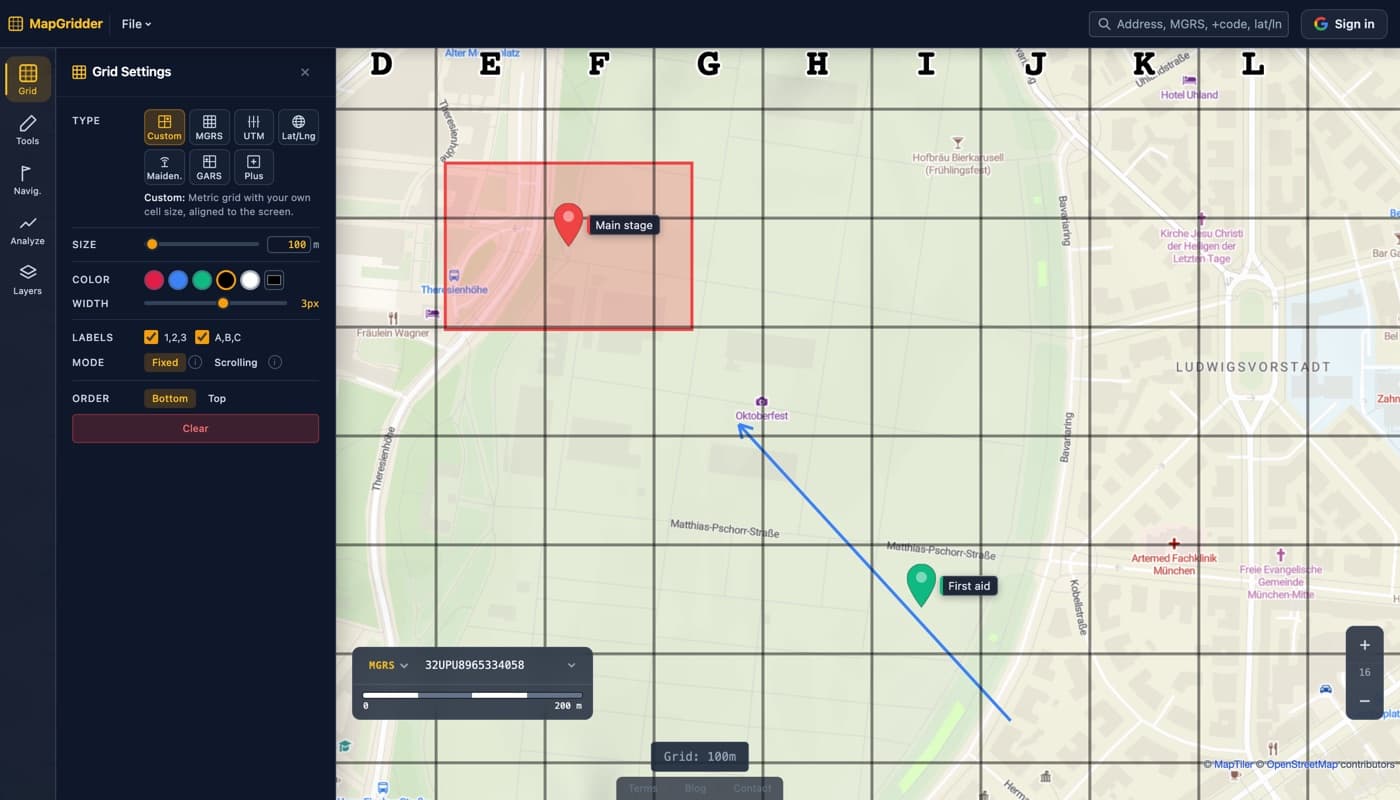
A metric grid with annotations turns an event layout or a volunteer field plan into cells anyone can call by name.